Why a walk beats a drink for a first date
A drink is the default first meeting, and it's a worse one than a walk — for practical reasons, not romantic ones.
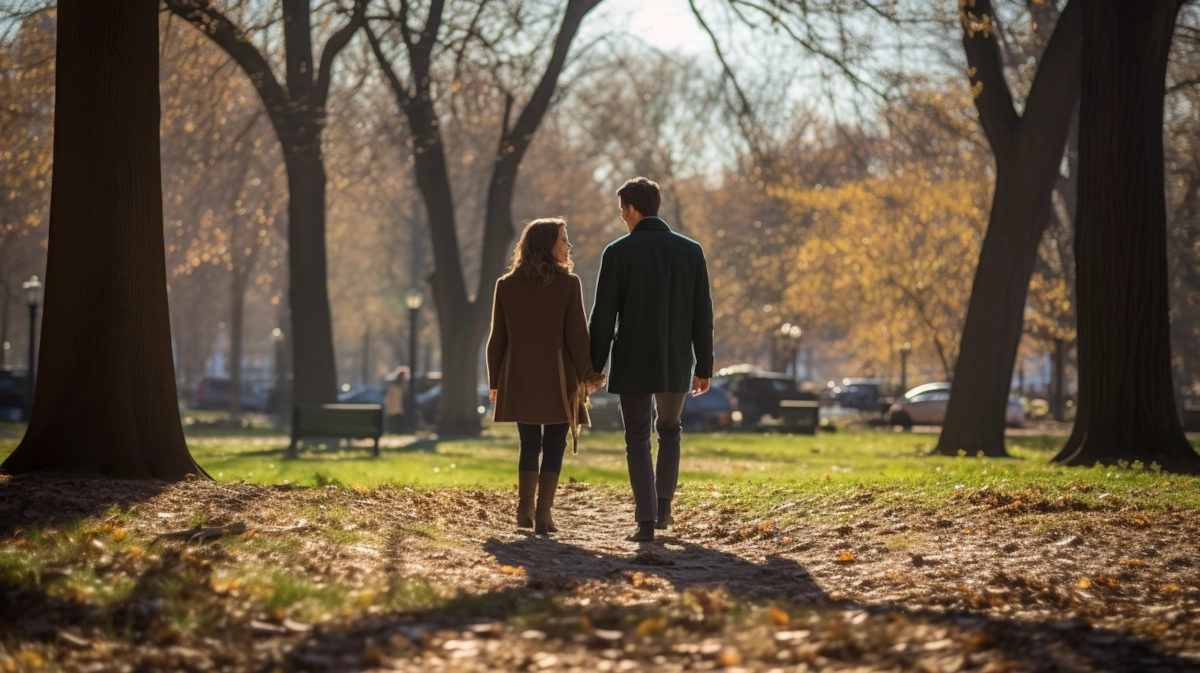
You're side by side, not face to face
Sitting opposite a stranger at a small table is the posture of an interview. Walking, eye contact is occasional rather than constant, and silences stop being something you have to fill — people who find first meetings hard tend to find walking ones much easier.
It ends by itself
A drink has no natural end, so ending it means someone has to decide and say something slightly awkward. A walk ends when you get back to where you started — carry on or stop for a coffee if it's going well, and you've both already agreed how long this was if it isn't.
There's something to look at
A conversation with nothing outside it has to be carried entirely by two people who've just met. A walk hands you prompts — a view, a dog, a building, the weather — and small talk stops being a performance.
It's cheap, and that matters more than people admit
A first meeting that costs nothing takes away the feeling that one person has spent something and is owed something for it. Nobody's buying anybody a drink.
No alcohol is worth a line on its own
Meeting a stranger is a situation where being fully in charge of your own judgement is worth having.
It's safer, and it's worth saying plainly
Daylight, a public route, your own way there and back, and nothing depending on anyone else's plan.
Making it easy on yourself
A few practical things, kept light rather than turned into a warning notice:
- Somewhere public and reasonably busy — a park, a canal path, a seafront.
- Somewhere you both know, or that's easy to find.
- Daylight.
- Tell someone where you're going and when you'll be back.
- Get yourself there and get yourself home.
- Ninety minutes is plenty for a first one.
It's also, funnily enough, what we do: if you and a match both said you like walking and you're both free on a Saturday morning, the plan we suggest is a walk on a Saturday morning. If that sounds like your kind of first date, you can Join and see who's free when you are.